
An AI chat widget is a 24/7 conversational assistant that lives on your website, answers a visitor’s question the moment they ask it, qualifies them, and books the call straight into your calendar — so a Phoenix marketing agency stops losing the roughly 93% of website visitors who leave without converting. The math is brutal and well-documented: the median landing page converts just 6.6% of its traffic (Unbounce, 2024), and the leads you do generate go cold in minutes if nobody responds. An AI chat widget closes both gaps at once — it engages the 93% who would otherwise bounce, and it responds in seconds, every hour of every day, without adding a single person to payroll.
I came up on the media-buying side, managing seven-figure ad budgets, and the pattern never changed: agencies obsess over driving traffic and ignore what happens when that traffic lands. You can double your ad spend or you can convert more of the visitors you already paid for — and in Phoenix, one of the most competitive agency markets in the country, the second option is almost always cheaper. Here’s the sourced case for an AI chat widget, and how to build one properly inside GoHighLevel.
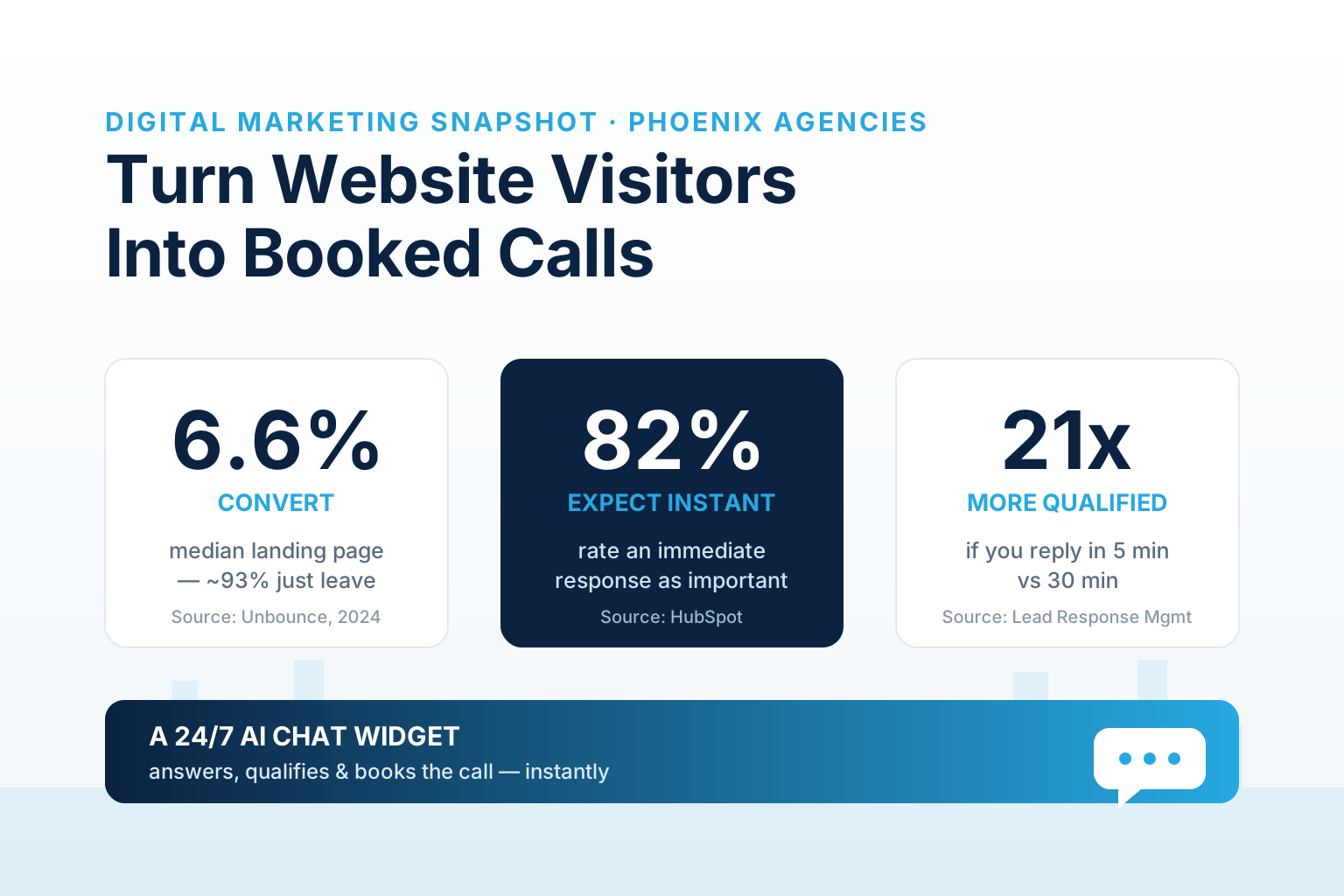
Table of contents
- What an AI chat widget actually is
- The leak: most Phoenix website traffic never converts
- Speed-to-lead is the whole game
- What buyers expect in 2026: instant or nothing
- How an AI chat widget works, step by step
- Live chat vs an AI chat widget
- Build it right inside GoHighLevel
- Why this matters more for Phoenix agencies
- FAQ
What an AI chat widget actually is
An AI chat widget is the small chat bubble in the corner of a website — but powered by an AI agent trained on your business, not a rigid decision-tree bot. When a visitor opens it, the AI understands plain-English questions (“do you do Google Ads for HVAC companies?”), answers accurately from your offers and FAQs, qualifies the person on budget, timeline, and service, and then books a call directly into your calendar or hands a hot lead to your team.
The distinction that matters: a form waits passively for a visitor to fill it out and a human to follow up later; an AI chat widget engages the moment interest is highest and converts before the visitor leaves. That timing difference is the entire ballgame, and the data below explains why.
This is the same capability behind our AI chatbot feature and a close cousin of the AI caller that handles the phone — two sides of the same “never miss a lead” system.
The leak: most Phoenix website traffic never converts
Start with the number every agency owner should have taped to their monitor. Across 57 million-plus conversions and 41,000 landing pages, the median landing page conversion rate is 6.6% (Unbounce, 2024). Flip it around: about 93 out of every 100 visitors you drive to a page — with ad spend, SEO, or a client’s budget — leave without doing anything.
For a Phoenix agency, that leak has two costs. The first is your own pipeline: every prospect who lands on your site, likes what they see, but isn’t ready to fill out a contact form is a retainer you may never hear from again. The second is your clients’ results — the exact conversion problem you’re paid to solve. An AI chat widget attacks both. Instead of hoping a visitor commits to a form, it opens a conversation, answers the objection in their head, and offers the next step (a booked call) while they’re still on the page.
Out of every 100 visitors to a typical landing page, only about 7 convert. Median landing page conversion rate: Unbounce Conversion Benchmark Report, 2024.
Only 14% of people say they prefer filling out an online form, while 42% expect an immediate response from a chatbot (Drift, State of Conversational Marketing). You are asking the majority of your traffic to use the channel they like least. Chat flips that.
Speed-to-lead is the whole game
Say a visitor does submit a form. Now the clock is the enemy. The classic Lead Response Management study — 15,000+ leads and 100,000+ call attempts analyzed by Dr. James Oldroyd — found that contacting a web lead within 5 minutes versus 30 minutes made you roughly 100× more likely to make contact and about 21× more likely to qualify that lead (LeadResponseManagement.org). Harvard Business Review’s audit of 2,241 U.S. companies reached the same conclusion: firms that responded within an hour were 7× more likely to qualify a lead — yet only 37% responded within an hour, and 23% never responded at all (HBR, 2011).
Those studies are older, but the human behavior behind them hasn’t changed — if anything, patience has shrunk. The takeaway is timeless: a lead’s value decays by the minute, and almost nobody responds fast enough. An AI chat widget doesn’t respond in five minutes; it responds in five seconds, at 2 p.m. or 2 a.m., every day, without a person on shift.
Relative likelihood of qualifying a web lead by response time (5-minute reply set to baseline). Source: Lead Response Management Study (Oldroyd); corroborated by Harvard Business Review, 2011.
This is the same principle behind speed-to-lead for agencies and missed-call text-back — respond first, win the lead. The chat widget just moves the response from “minutes” to “instant,” and from “a human has to be awake” to “always on.”
What buyers expect in 2026: instant or nothing
The expectation gap is now the deciding factor. 82% of consumers rate an immediate response as important or very important when they have a sales or marketing question (HubSpot), and 71% of customers expect companies to interact with them in real time (Salesforce, State of the Connected Customer). When you can’t meet that expectation, the visitor doesn’t wait — they open a new tab and message the next agency on the search results page.
Percent of consumers, by expectation. Sources: HubSpot; Salesforce, State of the Connected Customer; Drift & SurveyMonkey.
This shift is why the global chatbot market is projected to grow from about $7.76 billion in 2024 to $27.29 billion by 2030 — a 23.3% compound annual growth rate (Grand View Research). Buyers have been trained by every other tab they open to expect a real-time answer. The agencies that install one now look modern and responsive; the ones that don’t look, increasingly, like they’re closed.
How an AI chat widget works, step by step
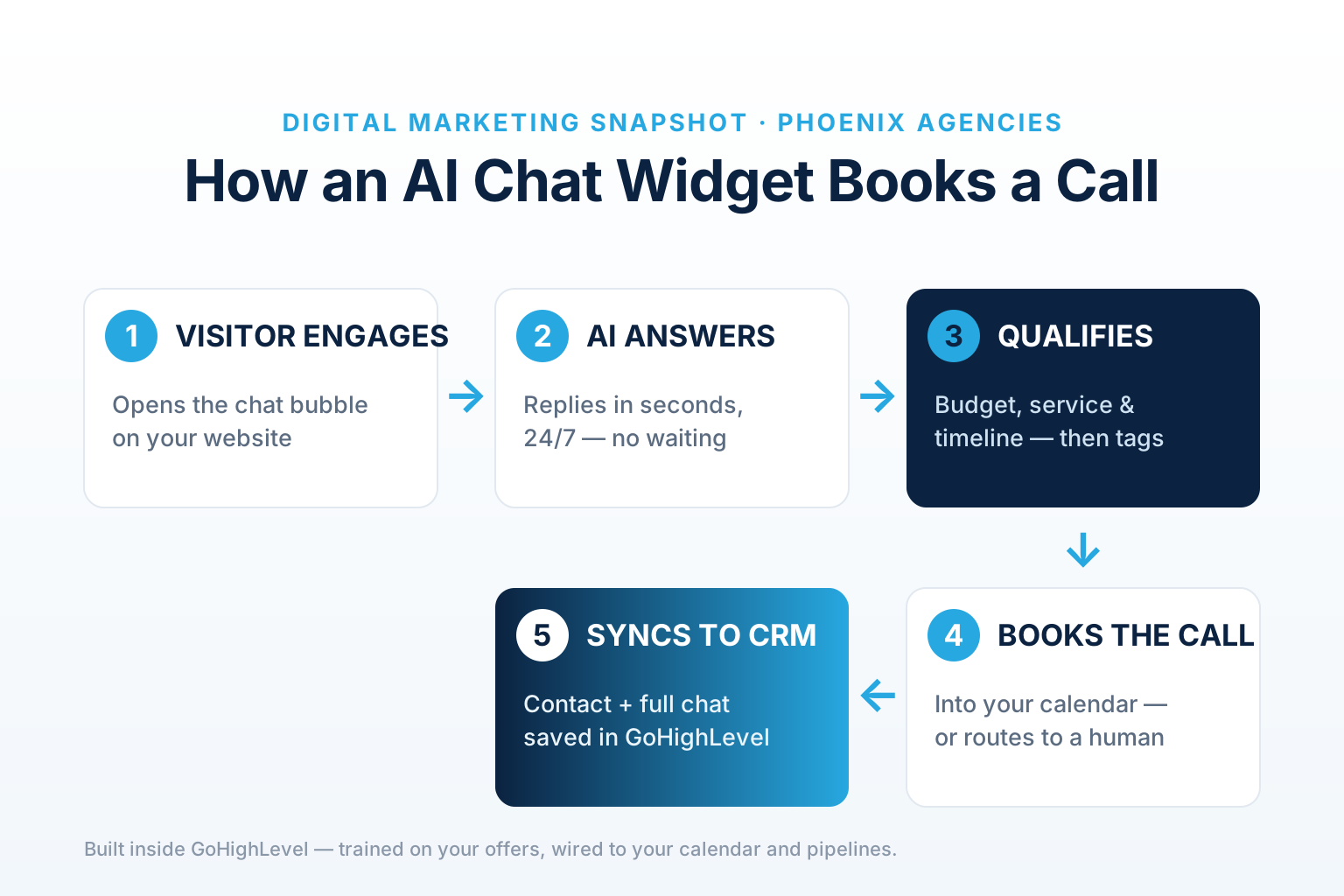
An AI chat widget isn’t magic — it’s a clean, five-step workflow you can wire once and run forever:
- Visitor lands and engages. The chat bubble greets them contextually (different message on the pricing page than the blog) and invites a question.
- AI answers in real time. Trained on your services, pricing logic, and FAQs, the AI responds instantly in natural language — no menu trees, no “an agent will be with you shortly.”
- It qualifies the lead. The AI asks the right questions — service needed, budget range, timeline, location — and tags the contact accordingly.
- It books the call or routes the lead. A qualified visitor is offered live calendar slots and books directly; a hot or complex lead is handed to a human with the full transcript attached.
- Everything lands in the CRM. The contact, conversation, tags, and source are written to GoHighLevel automatically, so lead attribution and follow-up sequences fire without manual data entry.
The result is a system that behaves like your best salesperson working a 24-hour shift: always available, never off-message, and logging every interaction. Pair it with Instagram DM automation and the AI caller, and every channel a lead can reach you on is answered instantly.
Live chat vs an AI chat widget
Human live chat sounds like the gold standard until you price the coverage. Someone has to be online, and “online” for a Phoenix agency serving clients across time zones means evenings and weekends too. Here’s the honest comparison:
Human live chat vs an AI chat widget
| Plan | Human live chat | AI chat widgetRecommended |
|---|---|---|
| Price | Staff wages + coverage gaps | One build, runs 24/7 |
| Feature 1 | Only answers during staffed hours | Answers in seconds, every hour |
| Feature 2 | Slower on nights & weekends | Consistent, on-brand every time |
| Feature 3 | Quality varies by who's online | Handles unlimited chats at once |
| Feature 4 | Doesn't scale past a few chats at once | Qualifies and books automatically |
| Feature 5 | No automatic CRM logging | Every chat synced to GoHighLevel |
| Get one built → |
The point isn’t that AI replaces your team — it’s that AI handles the first response every time, so your people spend their hours on qualified, booked conversations instead of babysitting a chat window. This is the same logic behind the whole GoHighLevel snapshot: automate the repetitive first touch, keep humans for the high-value work.
Build it right inside GoHighLevel
Anyone can drop a generic bot on a site. The difference between a widget that annoys visitors and one that books calls is in the build — and that’s where doing it inside GoHighLevel matters. A well-built widget is trained on your offers (not scraped web text), connected to your GHL calendar and pipelines, tagged for attribution, and handed off cleanly to humans when a conversation gets complex.
That’s exactly what we build. Our custom GHL development team creates AI chat agents trained on your agency’s services and your clients’ niches — agents that qualify leads, book directly into the GoHighLevel calendar, and tag every contact by campaign automatically. It’s the same infrastructure behind our AI receptionist work for agencies and the broader AI for marketing agencies playbook — built once, owned by you, running across your whole client roster.
Why this matters more for Phoenix agencies
Phoenix is not a market where a slow response goes unnoticed. With 1,650,070 residents, it’s the 5th-largest city in the United States (U.S. Census Bureau, 2023) — a deep pool of local businesses that both hire agencies and need the exact lead-capture systems you sell. That’s opportunity, but it’s also density: for every prospect who lands on your site and doesn’t get an instant answer, there’s another Valley agency one search result away, ready to answer in seconds.
When a Phoenix visitor is comparing three agencies at 9 p.m., the one whose site actually talks back wins the conversation — and usually the call. An AI chat widget is how a lean agency competes with bigger shops on responsiveness without hiring an overnight team. It’s the on-site version of the same speed advantage you already sell your clients, pointed at your own pipeline first.
If you’re weighing where an AI chat widget fits alongside the rest of your stack, our guide to AI for marketing agencies maps the full picture — chat, voice, and messaging working as one system inside GoHighLevel.
FAQ
AI chat widgets for Phoenix agencies — quick answers
What is an AI chat widget?
An AI chat widget is a conversational assistant embedded on your website that answers visitor questions in real time using an AI agent trained on your business. Unlike a static contact form or a rigid menu-tree bot, it understands plain-English questions, qualifies the visitor on budget, service, and timeline, and books a call directly into your calendar — 24 hours a day.
How is an AI chat widget different from live chat?
Human live chat only works when someone is online and available, so nights and weekends have coverage gaps and quality varies by who's staffing it. An AI chat widget answers in seconds every hour of the day, stays perfectly on-brand, handles unlimited conversations at once, and logs every chat to your CRM automatically. AI handles the instant first response; your team focuses on the qualified, booked calls.
Will an AI chat widget really book more calls for my agency?
It targets the two biggest leaks. First, the median landing page converts only 6.6% of visitors (Unbounce, 2024) — chat re-engages the roughly 93% who would otherwise leave. Second, speed decides who wins: responding in 5 minutes versus 30 made agencies about 21× more likely to qualify a lead in the Lead Response Management study, and a widget responds in seconds. More engaged visitors plus instant response equals more booked calls.
Can I use one AI chat widget on my clients' websites too?
Yes — that's where the margin is. Once it's proven on your own site, an AI chat widget becomes a productized retainer add-on you install and manage on every client's website. Built inside GoHighLevel, each client's widget is trained on their offers, wired to their calendar and pipelines, and reports lead volume you can put on a white-label report.
How do you build an AI chat widget in GoHighLevel?
We build a custom AI chat agent on the GHL API, trained on your services and FAQs, connected to your GoHighLevel calendar and pipelines so it can qualify leads, book calls, and tag contacts by campaign automatically. It hands complex conversations to a human with the full transcript attached. You can request a build on our GHL Development page.
Is an AI chat widget worth it for a small Phoenix agency?
Especially for a small agency. Phoenix is the 5th-largest U.S. city (Census, 2023), so you're competing with many other agencies for the same local businesses. An AI chat widget lets a lean team answer every visitor instantly — including after hours — without hiring an overnight staff, which is the cheapest way to compete on responsiveness against bigger shops.
Written by Callan Reeves, Performance Marketing & Attribution Lead. Callan came up on the media-buying side, managing seven-figure ad budgets across paid social and search, before rebuilding the whole tracking-and-response stack inside GoHighLevel. He writes about lead attribution, speed-to-lead, and turning website traffic into booked calls agencies can actually measure.
Related reading: Speed-to-Lead for Agencies · Missed-Call Text-Back for Agencies · AI Receptionist for Marketing Agencies · AI for Marketing Agencies · Lead Attribution That Proves ROI