For most Houston marketing agencies, off-the-shelf tools are the right starting point — but the moment you’re paying for a dozen subscriptions that don’t talk to each other, re-keying the same data by hand, and apologizing to clients because they have “nowhere to log in,” custom software becomes the cheaper option, not the extravagant one. The break-even point isn’t about ego or headcount. It’s a math problem: when the monthly bleed from wasted licenses, manual data entry, and lost client trust exceeds the one-time cost of building software that fits how your agency actually runs, you’ve outgrown buy and it’s time to build.
I spent eight years running fulfillment for a 40-client SEO and PPC shop before going independent, so I’ve lived on both sides of this. This is the operator’s version of the build-vs-buy debate — every number below is sourced and dated, and there’s a straight answer on when off-the-shelf still wins and when a Houston agency should commission its own CRM, client portal, or dashboard.
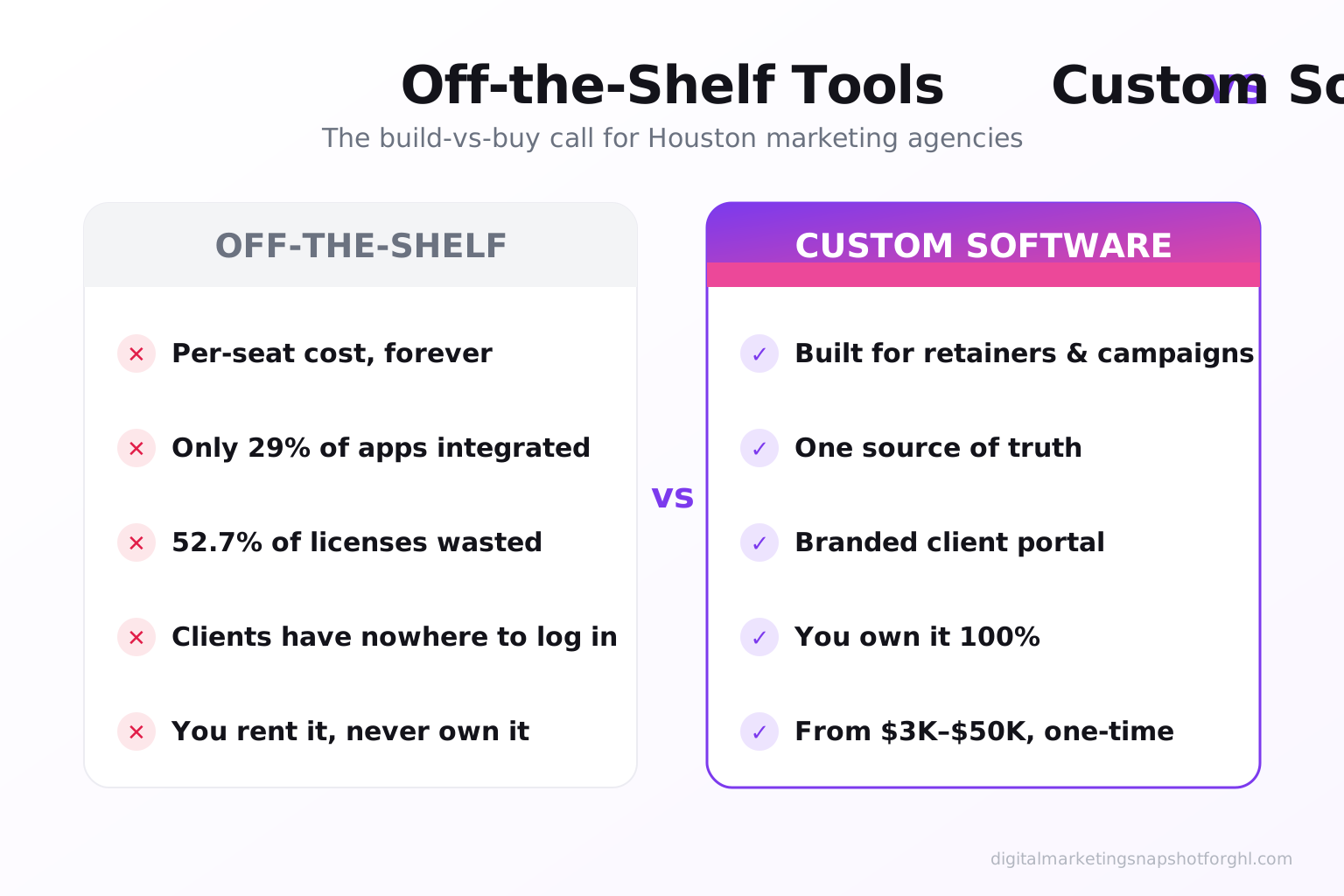
Table of contents
- Off-the-shelf vs custom software: the honest definitions
- The hidden cost of a duct-taped agency stack
- Custom vs off-the-shelf: the side-by-side
- When off-the-shelf tools are the right call
- When a Houston agency should build custom
- What “custom” actually looks like for an agency
- The build-vs-buy math
- FAQ
Off-the-shelf vs custom software: the honest definitions
Off-the-shelf software is anything you subscribe to and adapt your workflow around: HubSpot, Trello, Asana, ClickUp, spreadsheets, a reporting tool, a scheduling tool, a proposal tool. It’s fast to start, low commitment, and someone else maintains it. The catch is that you conform to the product — not the other way around — and you rent it forever.
Custom software is built around your workflow: retainers, campaigns, deliverables, and client approvals as first-class objects instead of fields you bolt onto a generic CRM. It’s a one-time build (with optional maintenance) that you own outright. Historically the knock on custom was that it cost too much and took too long. That calculus has changed — more on why below.
For a Houston agency, the real question isn’t philosophical. It’s: at what point does adapting to generic tools cost more than building one that fits? To answer that, you have to see what the duct-taped stack is actually costing you.
The hidden cost of a duct-taped agency stack
The costs of “just buy the tool” are real, they compound, and most agencies never add them up. Here’s what the data says.
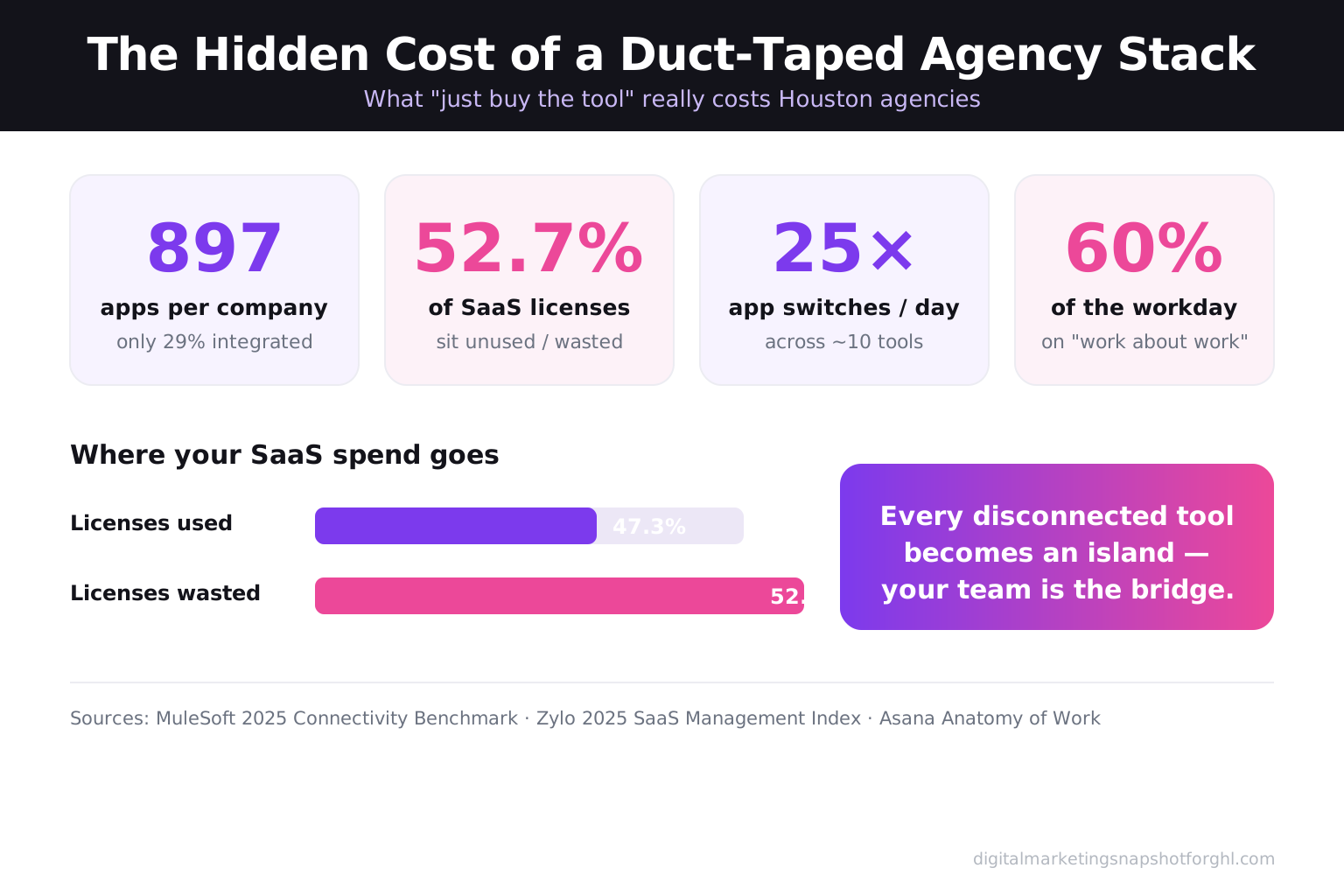
You pay for software nobody uses. Zylo’s 2025 SaaS Management Index found that 52.7% of purchased SaaS licenses sit unused or underutilized, wasting an average of $21 million a year per organization — a figure that grew 14.2% year over year. Overall SaaS spend now averages $4,830 per employee (Zylo, 2025). Even a lean shop is quietly paying for seats it forgot it had.
Your tools don’t talk to each other. MuleSoft’s 2025 Connectivity Benchmark reports the average organization runs 897 applications, but only 29% are integrated — and just 2% have connected more than half their apps (MuleSoft / Salesforce, 2025). Every disconnected tool becomes an island, and the bridges between islands are your team’s copy-paste.
That bridging work eats the day. Asana’s Anatomy of Work research found workers switch between about 10 apps 25 times a day, and 60% of time at work goes to “work about work” — communicating about tasks, hunting for information, switching apps, chasing status — instead of the skilled work clients pay for (Asana). For an agency billing on expertise, that’s margin evaporating into tab-switching.
Put together, the “cheap” option isn’t cheap. You’re paying subscription fees on shelfware, paying your team to hand-carry data between tools that won’t integrate, and paying an opportunity cost every hour a strategist spends being a human API.
Share of purchased SaaS licenses used vs. wasted. Source: Zylo 2025 SaaS Management Index (52.7% unused/underutilized).
Custom vs off-the-shelf: the side-by-side
Here’s the operator’s comparison — not features, but the things that actually decide whether the software helps you sign and keep retainers.
| Dimension | Off-the-shelf tools | Custom-built software |
|---|---|---|
| Fit to how an agency runs | Generic — you adapt to it | Built around retainers, campaigns, approvals |
| Data integration | Islands — only ~29% of apps talk | One source of truth, wired to your stack |
| Client-facing portal | Rarely native; clunky add-on | Branded portal with one client login |
| Cost shape | Per-seat, per-tool, forever (52.7% wasted) | One-time build, then hosting/maintenance |
| Speed to change | File a request, wait for the roadmap | You own the roadmap |
| Ownership | You rent; vendor can reprice or sunset | 100% yours, forever |
| Time to value | Minutes to sign up | 2–10 weeks to build |
| Best fit | Early-stage, standard workflow | Outgrown tools, differentiated ops, scaling |
Neither column is “the winner.” Off-the-shelf wins on speed-to-start and low commitment. Custom wins on fit, ownership, and cost-at-scale. The right answer depends entirely on where your agency sits — so let’s make that call concrete.
When off-the-shelf tools are the right call
I’ll be the first to say it: most Houston agencies should not build custom software yet. Buy off-the-shelf when:
- You’re early. Under ~10 clients, your processes are still changing weekly. Custom software would ossify a workflow you haven’t finalized.
- Your workflow is genuinely standard. If a stock CRM and a stock project tool fit you with light configuration, you don’t need a build.
- The tool sprawl is manageable. Two or three well-chosen, well-integrated tools beat a bespoke app you can’t maintain.
- Cash is tight and the pain is bearable. If the manual work is annoying but not costing real retainers, keep your capital.
A well-run stack of off-the-shelf tools — ideally consolidated into a platform like GoHighLevel so fewer things need bridging — is the correct, disciplined choice for the majority. The problem is what happens after you outgrow it. If you’re feeling that ceiling with GoHighLevel specifically, we wrote a companion piece on the signs you’ve outgrown DIY GoHighLevel.
When a Houston agency should build custom
Houston is the fourth-largest city in the U.S., sitting inside a national market of 105,214 advertising agencies (IBISWorld, 2025). In a market that dense, “we run on the same generic tools as everyone else” is not a differentiator — how you deliver is. Build custom when you hit these signals:
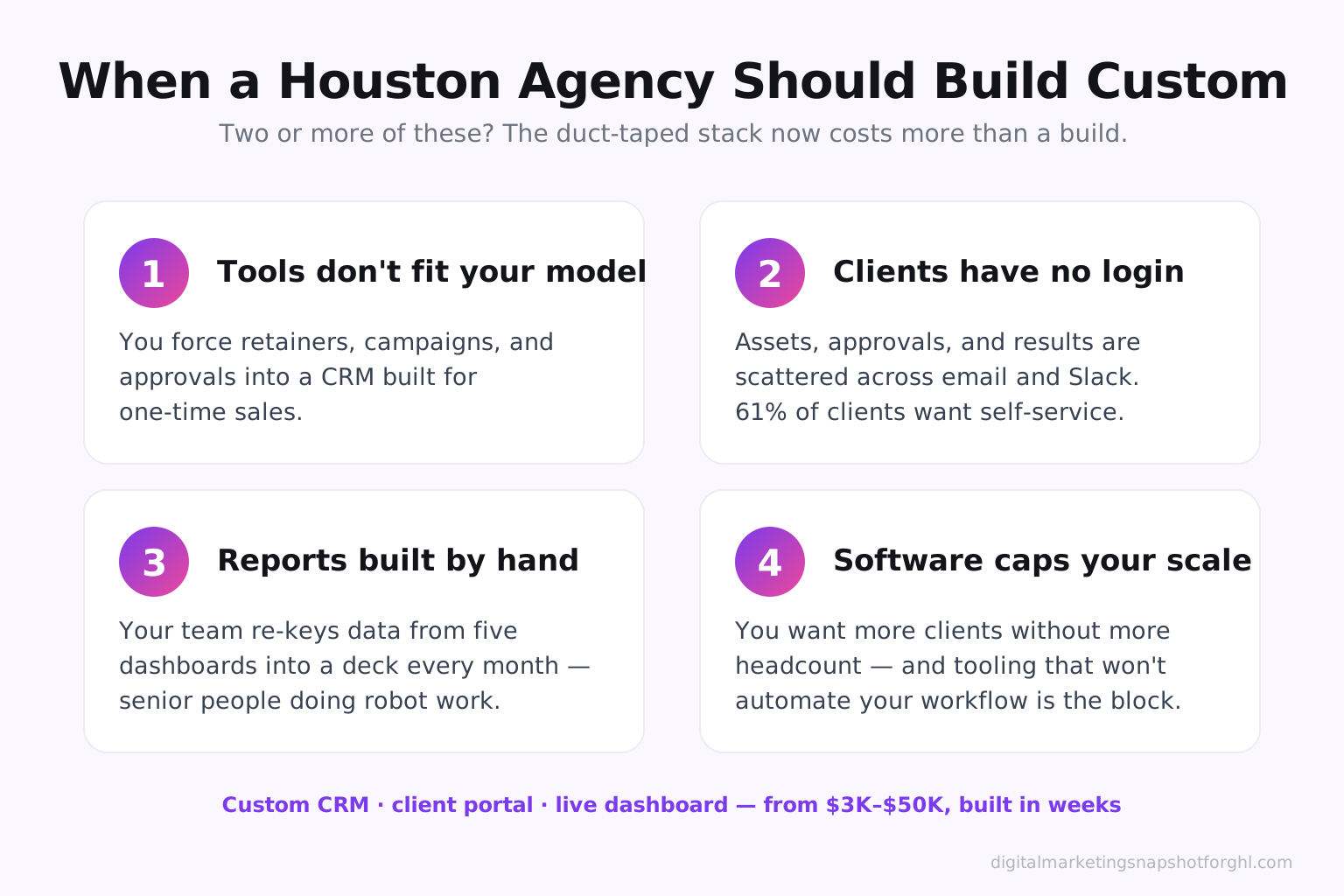
- Your tools don’t fit your model. You’re forcing retainers, campaigns, and approvals into a CRM built for one-time sales. You’ve bought fields, tags, and workarounds to make a generic tool pretend to be an agency system.
- Clients keep asking “where do I log in?” Assets, approvals, and results are scattered across email and Slack. Every “how are my campaigns doing?” turns into a scramble. A branded client portal fixes this — and clients want it: 61% prefer self-service for simple questions (Salesforce).
- You’re rebuilding the same report by hand every month. If your team re-keys data from five dashboards into a slide deck, you’re paying senior people to do robot work. A live reporting dashboard turns that into a URL.
- Software is now your bottleneck to scale. You want to add clients without adding headcount, and the only thing standing in the way is tooling that doesn’t automate your specific workflow. (More on that in how to scale without adding headcount.)
Share of service organizations that offer a self-service portal, by performance tier. Source: Salesforce, State of the Connected Customer / State of Service.
If two or more of those ring true, the duct-taped stack is now costing you more than a build would.
What “custom” actually looks like for an agency
“Custom software” sounds abstract, so here’s what agencies actually commission — each one solving a specific margin leak:
- A custom agency CRM. Retainers, campaigns, deliverables, and client approvals as first-class objects — your pipeline, your fields, your automations, plus a client-facing view you control. Typical build: ~6–10 weeks.
- A client & campaign portal. A secure, branded portal where clients upload assets, approve content, track deliverables, view live results, and message your team — replacing the email-and-Slack chaos with one login. Typical build: ~4–8 weeks.
- A live reporting dashboard. Real-time client results pulled from Google Ads, Meta, GA4, and your CRM into one white-label view — no more monthly hand-built decks.
- Custom integrations. The glue that finally makes your existing stack talk: sync leads and spend between the tools you already pay for, so you stop being the human bridge between islands.
If your build needs to live inside or migrate into GoHighLevel specifically, that’s GHL development territory; if it’s standalone software, it’s a custom software project. Many agencies need both.
The build-vs-buy math
Here’s the shift that changed everything: custom software used to be slow and expensive because engineers typed every line by hand. Today, AI-assisted development is measurably faster — a controlled study found developers completed a coding task 55.8% faster with an AI assistant (1 hour 11 minutes vs 2 hours 41 minutes), a statistically significant result (GitHub / Microsoft Research). A small senior team using tools like Claude Code ships production software in a fraction of the old timeline — which is why a custom portal or CRM now runs $3K–$50K fixed-price instead of six figures.
A Houston agency's stack: off-the-shelf sprawl vs custom
8–12 subscriptions, ~half the seats unused. Team re-keys data between tools 25+ times a day. Clients email for updates; reports are hand-built each month. You rent it all, forever, and it still doesn't fit.
One system built around retainers and campaigns. Clients log into a branded portal. Reports are a live URL. Data flows automatically between tools. Built once in weeks, owned outright, priced from $3K–$50K.
Run the numbers against your own agency: add up every subscription (including the wasted 52.7%), the hours your team loses to manual bridging, and the retainers you’ve lost because a client couldn’t see their results. When that annual total crosses the one-time cost of a build, custom is simply the cheaper line item.
FAQ
Custom software vs off-the-shelf for Houston agencies — quick answers
Is custom software worth it for a small Houston marketing agency?
It depends on your scale and pain. Under about 10 clients with a standard workflow, off-the-shelf tools are usually the smarter, cheaper choice. Once you're paying for subscriptions you don't fully use, re-keying data between tools that won't integrate, and losing retainers because clients have nowhere to log in, a custom build often costs less per year than the duct-taped stack it replaces — especially now that AI-assisted development has cut build times and prices dramatically.
How much does custom software cost for an agency?
Fixed-price custom software projects typically run $3,000 to $50,000+ depending on scope, or roughly $75/hour on an hourly retainer with no minimums. A client portal is usually a 4–8 week build; a custom agency CRM is 6–10 weeks. You get a written scope with milestones and a fixed price after a free discovery call, so there are no open-ended surprises.
What custom software do marketing agencies commission most?
The four most common builds are a custom agency CRM (retainers, campaigns, and approvals as first-class objects), a branded client and campaign portal (one login for assets, approvals, results, and messaging), a live reporting dashboard (real-time client results from Google Ads, Meta, and GA4), and custom integrations that connect the tools you already pay for into a single source of truth.
Should I just consolidate my tools instead of building custom?
Often, yes — that's the right first move. Consolidating a sprawl of point tools into one platform like GoHighLevel reduces the number of islands that need bridging and eliminates a lot of wasted licenses. Build custom only when the consolidated platform still can't model your specific workflow, or when clients need a branded experience the off-the-shelf tool can't provide.
How long does it take to build custom software for an agency?
Because modern teams build with AI-assisted development, timelines are typically half what traditional dev shops quote. Simple integrations run 2–4 weeks, client portals and dashboards 4–8 weeks, and a full custom CRM 6–10 weeks. A controlled GitHub/Microsoft study found AI assistance made developers about 55.8% faster on a coding task, which is the main reason custom builds are now measured in weeks.
Will I actually own the custom software, or is it another subscription?
You own it outright — the code is 100% yours. Unlike off-the-shelf SaaS, where you rent access forever and the vendor can reprice or sunset the product, a custom build is a one-time project. After delivery you can host and maintain it yourself, hire a dedicated engineer for ongoing changes, or keep a light hourly retainer for new features.
Written by Marisa Quintero, Agency Operations Strategist. Marisa spent eight years running fulfillment for a 40-client SEO and PPC shop before going independent. She’s obsessed with the boring half of agency life — onboarding, reporting cadences, and retainer renewals — because that’s where margin quietly leaks out. She writes from Austin, TX about turning messy agency workflows into systems that hold up at scale.
Related reading: The White-Label Client Portal Guide · Custom Reporting Dashboard vs Manual Reports · How to Scale a Marketing Agency Without Adding Headcount · Signs You’ve Outgrown DIY GoHighLevel · What Is a GoHighLevel Snapshot?